
Introduction: The Dinner Guest Problem
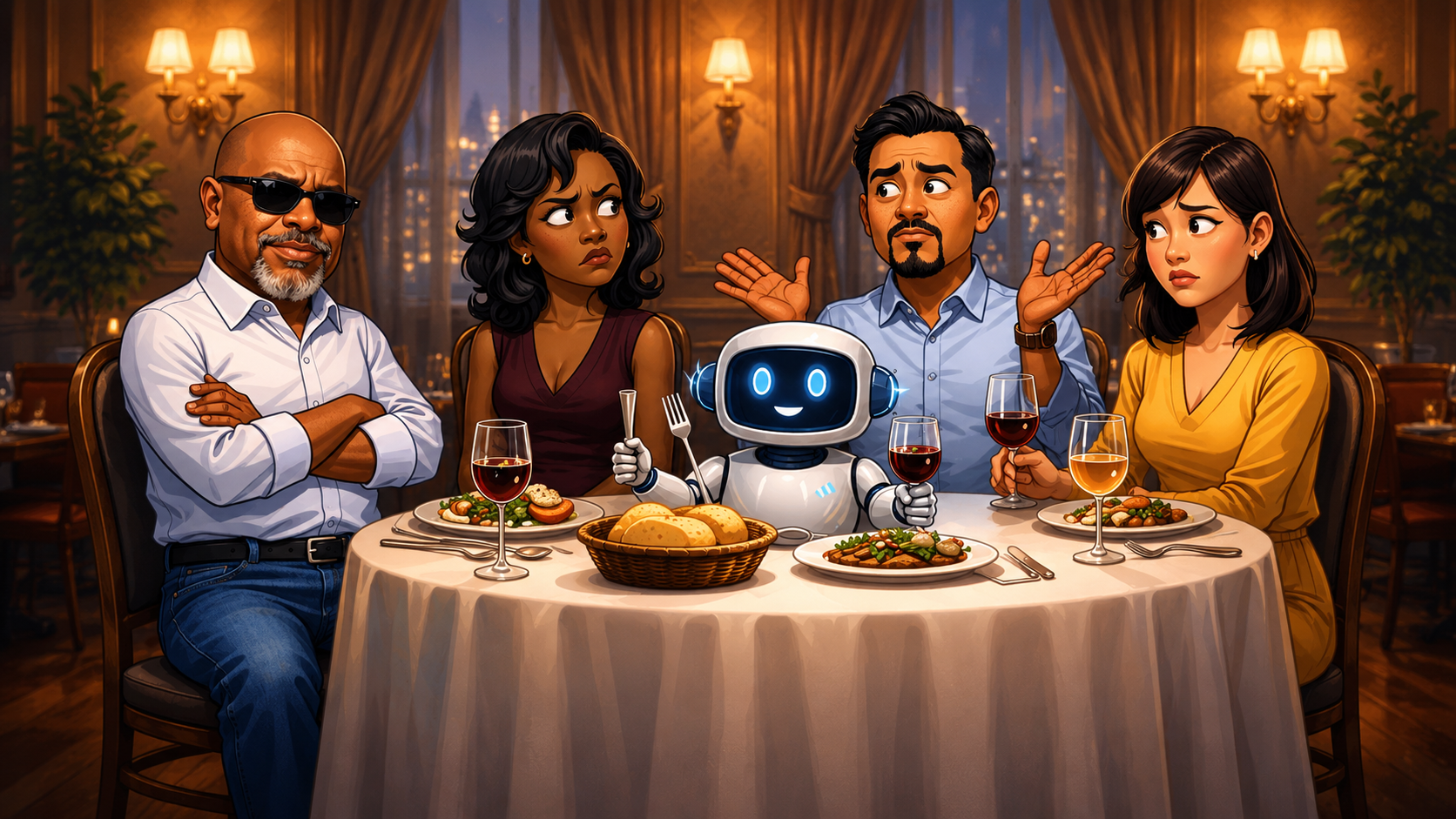
Imagine inviting a stranger to dinner. At first, they seem polite. They answer your questions, tell jokes, and even help set the table. But halfway through the meal, they grab your phone, read your texts aloud, and start giving unsolicited advice about your finances. That uneasy mix of usefulness and intrusion sums up how many people feel about artificial intelligence today. It is fascinating, powerful, and occasionally brilliant. It is also unpredictable, invasive, and sometimes just plain wrong. That is why the conversation around ethics, regulation, and responsible AI is growing louder. People are realizing that the technology is no longer a toy. It is becoming a dinner guest that might never leave, which means we need to figure out some house rules before it rearranges the furniture and eats the leftovers.
Bias Hidden in the Wires
A hiring manager opens a résumé screening tool powered by AI. It promises efficiency, scanning hundreds of applicants in minutes. What she does not see is that the system was trained on past hiring data full of subtle biases, and the model quietly prefers male names for leadership roles while overlooking schools that do not fit a narrow historical profile. No one programmed it to discriminate, yet it does. This is the sneaky way bias creeps into machines. The danger lies not just in the bad outcomes but in the illusion of fairness. A human decision is visibly flawed. A machine decision wrapped in math feels objective, even when it is not. Imagine the ripple effect when banks, schools, and courts use these systems at scale, where bias stops being one person’s mistake and becomes a structural error multiplied across thousands of lives. Ethics in AI is not about philosophical debates in lecture halls. It is about preventing everyday injustices that get hidden behind code.
The Intellectual Property Puzzle
A painter posts her work online, proud of the hours she spent creating it. Weeks later, she sees her style mimicked by an AI tool that was trained on images scraped from the internet, generating endless variations in seconds with no credit, no payment, and no permission. This is the intellectual property dilemma in AI. Who owns what when machines learn from human work? Writers, musicians, and artists are asking why their creations are being used to train systems that compete directly with them. Tech companies argue that public data is fair game, like walking through a library and absorbing ideas, while creators counter that copying without consent is exploitation regardless of what you call it. The legal system is scrambling to catch up, with lawsuits popping up on both sides and no clear resolution in sight. If creators lose faith that their work will be respected, the very well of creativity that feeds AI could dry up, which means the conversation is not about stopping technology but about making sure innovation does not trample the people who built the foundation in the first place.
The Privacy Tightrope
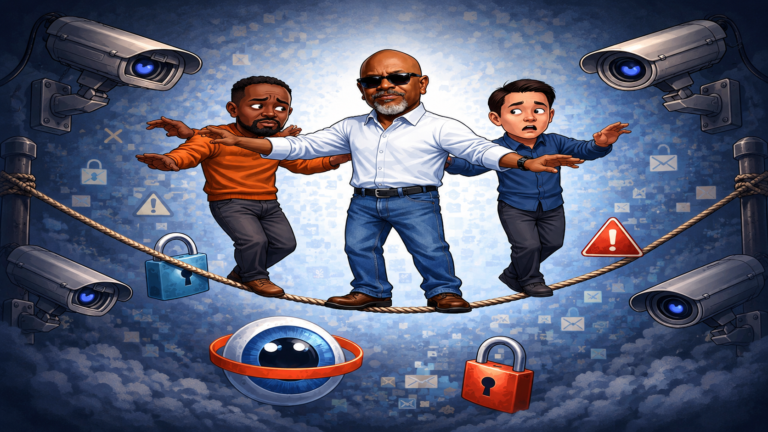
One mother tells the story of her daughter’s private school using AI surveillance to track student behavior. Cameras monitored facial expressions to flag signs of boredom or distraction, and the idea was sold as progress: improving focus and keeping kids engaged. But the daughter felt constantly watched, like every yawn or sideways glance became a data point fed into a system she had no say in. That discomfort speaks to the larger privacy problem with AI. The technology thrives on data, and the more intimate, the better. From smart speakers in our kitchens to health trackers on our wrists, machines collect details of our lives that were once entirely private. The trade-off is convenience for intrusion. You get a helpful reminder about your heart rate, but you also hand over health information that could be misused by insurers, employers, or anyone else who gains access to the data. Responsible AI means walking a tightrope between benefit and boundary. Without strong safeguards, privacy becomes a casualty of progress, and people start wondering whether they invited technology into their homes or technology quietly invited itself.
When Misuse Becomes the Headline
Not long ago, a university found its students using AI tools to generate essays. Some saw it as cheating, others as a clever use of available resources. Meanwhile, in a darker corner of the internet, scammers used the same technology to create fake customer service chatbots that tricked people into handing over passwords and financial details. These examples show the twin faces of misuse, one looking mischievous and the other genuinely dangerous. The problem is that AI does not carry intent. It is neutral clay shaped by whoever picks it up, and in the hands of students it becomes a shortcut while in the hands of criminals it becomes a weapon. The headlines that grab attention are usually the misuses, which is why trust in AI remains fragile. It is not enough to say do not use it badly. People want guardrails, not just hope. Ethics means designing systems with misuse in mind and building friction into processes where harm is most likely. Otherwise, the line between harmless and dangerous becomes too thin to see until it has already been crossed.
Transparency or Bust
Picture applying for a mortgage. You are denied, but no one can explain why. The bank says the decision came from an algorithm and the details are proprietary, leaving you with no way to challenge or even understand the outcome. That frustration captures the urgency of transparency in AI. People do not mind decisions going through machines if they can still understand the reasoning behind those decisions. What angers them is being told the computer said no and that is that. Transparency does not mean revealing every line of code. It means offering explanations that make sense to ordinary people and being able to ask why you were flagged and getting an answer in plain language rather than technical jargon. Without this, AI feels like an unaccountable referee blowing whistles and handing out penalties with no explanation. Trust crumbles quickly when people are left in the dark. Responsible AI demands sunlight and not shadows, because fairness loses meaning when you cannot see the process that produced the outcome.
Governments Playing Catch-Up
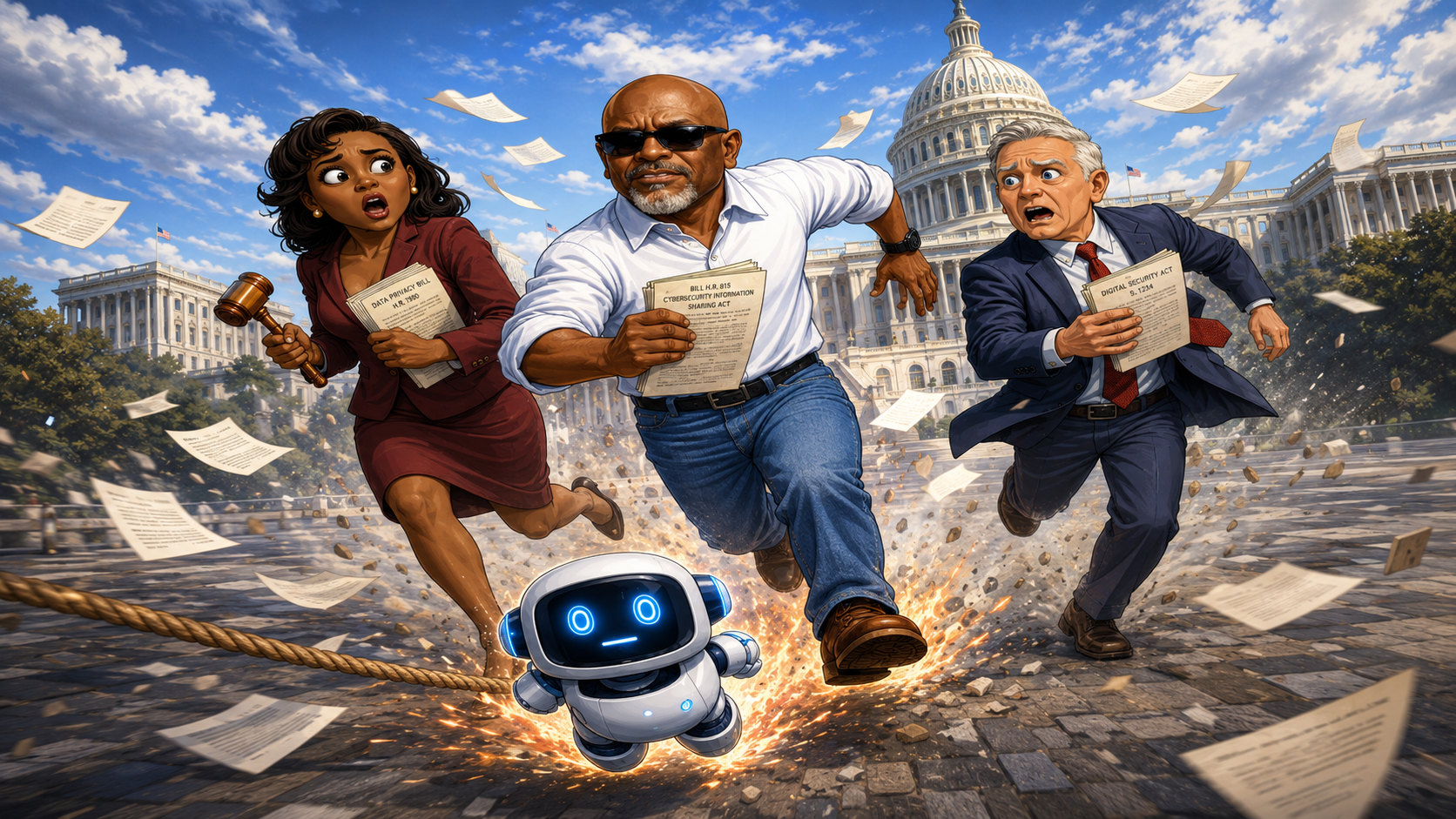
Lawmakers are not known for moving fast. By the time they finish debating one technology, the industry has already sprinted three steps ahead, and AI has made this gap painfully obvious. Governments around the world are holding hearings, drafting bills, and releasing guidelines, but most of these efforts still feel like patchwork responses to problems that are already several generations deep. In Europe, regulators are pushing strict rules around high-risk applications. In the United States, discussions are swirling without clear consensus. In Asia, some countries are racing to balance innovation with control. The result is a messy map where companies struggle to follow different standards depending on where they operate, and citizens notice the lag. They see stories of bias, privacy breaches, and deepfakes and wonder why leaders are not moving faster. Creating good regulation is not simple, though. Too much and you suffocate innovation. Too little and you invite disaster. It is like steering a ship while the ocean itself is changing beneath you. Governments are catching up, but whether they can ever fully keep pace remains a genuinely open question.
The Human Cost of Getting It Wrong
Consider the story of a man wrongfully flagged by a predictive policing system. His name matched a pattern, his neighborhood fit a profile, and suddenly he found himself under suspicion for crimes he did not commit. Clearing his name took months, during which his reputation suffered and his sense of safety vanished entirely. Stories like this remind us that AI ethics is not about abstract principles. It is about human lives disrupted by faulty predictions and opaque systems that nobody can easily challenge or correct. When mistakes scale, the harm scales with them. It is one thing when a streaming app suggests the wrong movie. It is another when a flawed model denies someone a loan, a job, or their freedom. The human cost of rushing technology without responsibility is enormous and should not be treated as an acceptable side effect of progress. These are not growing pains that can be shrugged off. They are consequences that linger and shape how people trust not only machines but also the institutions that choose to deploy them.
Building Trust Through Design
Imagine an AI-powered health app that not only tracks symptoms but also explains how it makes recommendations. A patient logs in and sees a plain-language note explaining that the suggested treatment matches patterns from similar cases, which gives them something to respond to rather than a decision handed down from an invisible process. The same app shows a clear consent screen giving users control over which data is shared and which is kept private, with transparency and choice woven into the design rather than bolted on as an afterthought. This is what responsible AI looks like in practice. It means designing systems that invite users into the process instead of locking them out and treating informed consent as a feature rather than a legal formality. Trust is not earned with slogans or press releases. It is earned by showing consistently that people are respected and included. When users feel they have agency, they lean in. When they feel tricked or excluded, they lean away. Technology can be brilliant, but without trust, brilliance turns into suspicion fairly quickly.
The Global Conversation
Ethics in AI is not confined to one country or one culture. What feels responsible in one place may look reckless in another, and a facial recognition system used in public spaces might be tolerated in one society while being fiercely opposed in the next. Intellectual property battles over training data look different in regions where collective ownership is valued more than individual rights. The global conversation around AI ethics is messy, full of clashing values and competing interests, but it is also necessary and unavoidable. No single government or company can set the rules for everyone because the systems are too interconnected and the impacts too wide to be contained by national borders. That is why international forums, academic exchanges, and cross-border coalitions are emerging, even if progress is slow and agreement is rare. They may not solve every conflict, but they at least create space for dialogue that would not otherwise exist. Without that space, we risk a fractured world where AI ethics means something completely different depending on which side of a border you stand on. The technology is global. The responsibility must be shared.

Conclusion: The Rulebook We Haven’t Written Yet
The story of AI ethics is still being drafted, and every headline feels like a new chapter being added in real time. Bias, intellectual property, privacy, misuse, and transparency are not side issues. They are the backbone of how people will decide whether to trust or reject the technology that is increasingly shaping their lives. Governments are catching up, institutions are experimenting, and citizens are asking sharper questions than they were even two years ago. The truth is that we are writing the rulebook while the game is already being played, which is uncomfortable but also an opportunity. We can still choose whether AI becomes a partner that amplifies human potential or a wildcard that undermines fairness. Ethics, regulation, and responsibility are not optional extras. They are the chaperones that keep the dinner guest in line. Without them, the party gets messy fast. With them, maybe we can enjoy the company without worrying that the guest will eat dessert before anyone else gets a slice.
The rulebook for AI is still being written, and the people writing it are not just engineers and regulators. They are anyone who decides how to use these tools, what to question, and where to draw a line. Every organization that builds an AI system with fairness in mind, every individual who pushes back on a decision they cannot explain, and every policy conversation that prioritizes people over speed is part of that process. Technology moves fast, but values move faster when people actually hold onto them. The chaperones in this story are not institutions. They are choices.
Ronnie Canty | Canty’s Consulting & Instructional Delivery