
Let’s get the uncomfortable question out of the way right now. Did AI write this post? The honest answer is that it depends on what you mean by “write.” If you mean did a language model generate every word from scratch with zero human direction, context, or judgment, then no. If you mean did a human being think through an argument, decide what needed to be said, shape the structure, review every line, and make calls about what stayed and what got cut, then yes, that human was me. The tool I used to get there happens to be powered by artificial intelligence. That detail does not change who is responsible for what you are reading.
The reason this question makes people uncomfortable is that most of the conversation around AI and writing lumps everything into the same pile. Someone using AI to mass-produce fake product reviews gets treated the same as a consultant using AI to draft a blog post that they then spend time refining. Those two situations are not remotely the same, and conflating them does real damage to how people think about this tool. The ethics of using AI as a content creator are not simple, but they are also not impossible to sort through if you are willing to actually think about it.
What AI Actually Does When You Write With It
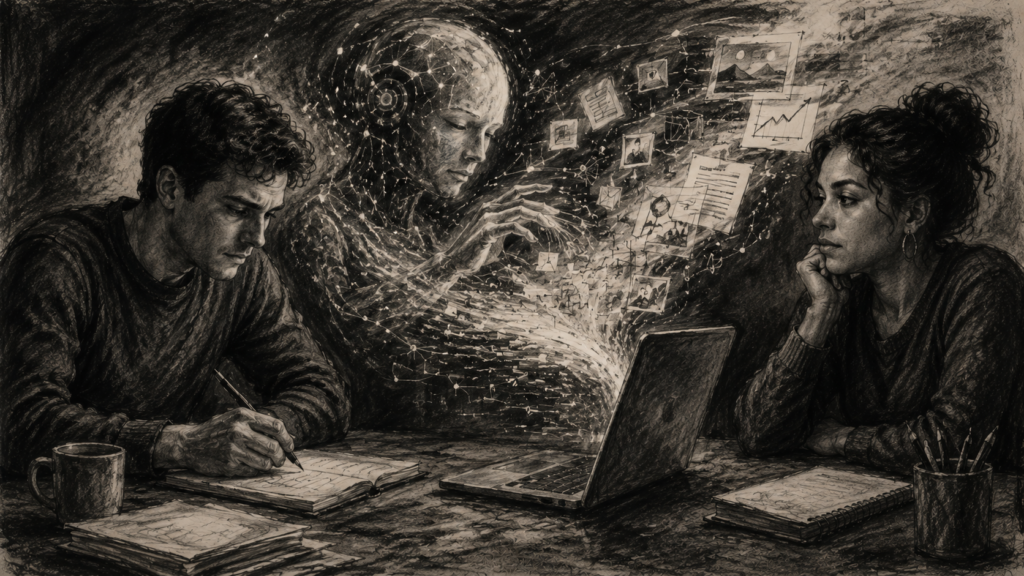
A language model does not know your audience. It does not know what problem you solved last Tuesday, what your clients keep getting wrong, or what frustration made you decide this topic was worth writing about. It knows patterns. It knows how sentences tend to follow other sentences. It knows that a post about productivity usually mentions time management at some point. What it does not know, and cannot know, is the specific human insight that makes a piece of writing worth reading instead of skipping.
When you use AI well as a writing tool, you are the one bringing the insight. You know what you want to argue. You know who the reader is and what they need to walk away with. The model helps you get words on the page faster, helps you think through structure, and helps you catch gaps in your reasoning. That is not fundamentally different from using a voice recorder to capture your thinking before you write, or working with an editor who helps you sharpen what you already know. The tool changes. The responsibility for what you say does not.
The people doing this well treat AI the way a skilled carpenter treats a power saw. The saw does not build the cabinet. The carpenter builds the cabinet. The saw makes certain parts of the job faster and more precise. Nobody walks through a furniture showroom and says the power saw made that piece. They say the craftsman did. AI in content creation works the same way, as long as the person using it is actually doing the work of a craftsman.
Writing Is Only One Thing AI Can Do for Your Content
Most of the debate around AI and content creation focuses on text, but that is a narrow view of what is actually possible. AI tools can generate images, review and proof documents, surface connections between ideas, and help you build a more coherent body of work across platforms. The question is not just whether you should use AI to write. The question is where else in your content process it can do real work so you can stay focused on what requires your specific judgment.
Image generation is one of the clearest examples of AI expanding what is accessible to independent creators. A few years ago, if you wanted custom visuals for a blog post, a course, or a social media campaign, you either paid a designer, spent hours in tools you barely knew, or settled for stock photos that looked like everyone else’s stock photos. Now you can describe what you need, generate options in minutes, and iterate until the visual matches the message. The image still has to serve the idea. You still have to know what you are trying to communicate visually. The AI does not make those calls. You do.
Proofing and document review is another area where AI earns its keep. Running a finished draft through an AI tool to catch inconsistencies, flag unclear passages, or identify places where your argument jumps without explanation is not cheating. It is editing with better tools. A human proofreader does the same job. The difference is speed and availability. If you are producing content at any real volume, having a review layer that catches problems before your audience does is just responsible practice.
Some of the less obvious uses are where things get genuinely interesting. AI is good at connecting ideas that you may not have linked yourself. You can feed it two separate pieces of your own writing and ask where the threads overlap, what tension exists between them, or how one piece could set up the other. For someone building a content ecosystem across multiple platforms and topics, that kind of synthesis work used to take hours of manual review. Now it takes minutes. The insight still has to be evaluated by a human who understands the full context. But the raw connection-making, the first pass at “here is how these ideas relate,” AI can do that faster than most people can.
Linking ideas across a body of work is a discipline that most content creators underinvest in. Posts get written, published, and then treated as separate objects that never reference each other. AI can help you audit what you have already built, identify where cross-references would strengthen individual pieces, and suggest how a new post fits into the larger conversation you have been having with your audience. That is not AI creating your strategy. That is AI helping you see the strategy you have already been executing so you can be more deliberate about it going forward.
Where It Goes Wrong
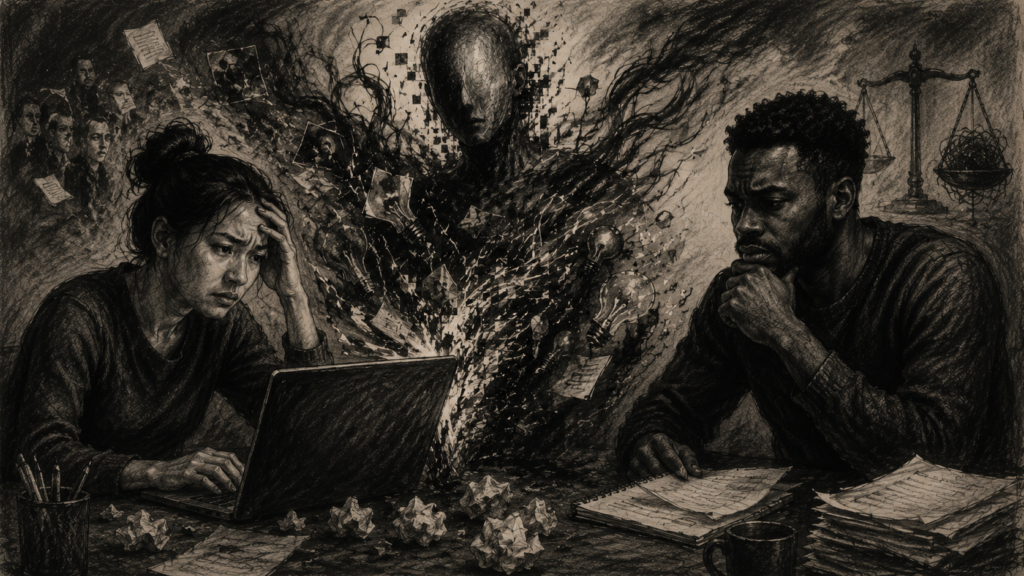
There is a version of AI content creation that is genuinely problematic, and it is worth naming directly. It looks like this: someone points a model at a topic, hits generate, copies whatever comes out, and publishes it with their name on it and no meaningful human review. No perspective check. No accuracy check. No judgment about whether the argument holds up. Just content volume for its own sake.
That approach is a problem for a few reasons. First, the output is almost always generic. Language models are trained to produce sentences that feel correct on average, which means they trend toward the safe, the obvious, and the already-said. If you are not pushing back, redirecting, and shaping the output, you end up with something that technically covers a topic but says nothing worth remembering. Second, it is dishonest in a way that matters. Your audience is trusting that what you publish reflects your thinking. If your thinking never entered the room, you have borrowed credibility you did not earn. Third, it scales the wrong things. The world does not need more volume. It needs more clarity. Using AI to produce more mediocre content faster is not a win for anyone.
There is also a specific category of misuse worth calling out: using AI to impersonate expertise you do not have. If you are generating technical content in a field where you have no background, no ability to spot errors, and no accountability for the advice, that is a different kind of ethics failure. The tool is not the problem. Hiding behind the tool is. AI makes it easy to generate authoritative-sounding text on any subject. It does not make you an authority on any subject. That requires you come with some effort.
The Fear Is About Authenticity, and That Fear Is Worth Examining
A lot of the resistance to AI-assisted content creation comes down to one word: authentic. People worry that if AI helped you write something, generate the image, or surface the connections between ideas, then the work is not really yours. That worry is understandable, but it deserves more scrutiny than it usually gets.
Every creator uses tools. Spellcheck. Grammarly. Style guides. Editors. Stock photo libraries. Research assistants. Templates. The question was never whether tools are involved. The question is whether the thinking behind the work is yours. A therapist who uses a structured intake framework to guide client sessions is not being inauthentic because they did not invent the framework from scratch. A teacher who uses a lesson plan template is not being inauthentic because they did not design the template. What makes the work authentic is that the human judgment, lived experience, and responsibility are present. Take those out and authenticity is gone regardless of what tools were used.
The fear also often comes from a place of comparison anxiety. If someone using AI can produce content faster than you can produce it manually, the instinct is to argue that their output is somehow worth less. But pace has never been the measure of value in content. What you say, how clearly you say it, and whether it lands with the person consuming it, that is the measure. AI does not change that standard. It just changes how quickly you can attempt to meet it.
What Ethical AI Content Creation Actually Looks Like
If you are going to use AI as part of how you create content, there are a few principles worth building into your process. None of these are complicated. All of them require you to stay in the room mentally instead of treating AI as a machine you feed a topic and walk away from.
Bring the insight yourself. Do not ask the model what to say or what image to make or which ideas connect. Start with your own thinking, and use the model to help you execute more effectively. The perspective, the argument, the specific knowledge that makes the content worth consuming, those have to come from you. AI can help you build the visual, sharpen the structure, or find the thread between two posts. It cannot supply the reason any of it matters.
Review everything before it goes out under your name. Not a skim. An actual review. Ask yourself whether the writing reflects how you actually think about the topic. Look at the generated image and ask whether it communicates what you intended or just looks close enough. Check where AI linked your ideas and ask whether those connections are actually valid or just plausible-sounding. You are responsible for what you publish. That responsibility does not transfer to the model.
Be honest with yourself about your purpose. Are you using AI to communicate ideas more efficiently and build a stronger body of work, or are you using it to avoid doing the thinking at all? One of those is a legitimate workflow. The other is a shortcut that will catch up with you eventually, usually in the form of content that feels hollow to the people consuming it.
Do not use it to fake expertise. If you do not understand the topic well enough to review the output for accuracy, evaluate the generated image for appropriateness, or assess whether the idea connections actually hold up, you have no business publishing that output under your name. AI makes it easy to generate authoritative-looking and authoritative-sounding content on any subject. It does not make you an authority on any subject. That requires you come with some effort.

The Bottom Line
AI as a content creation tool is not going away, and the scope of what it can do is only expanding. Writing, image generation, document review, idea synthesis, cross-content linking, all of it is on the table. The question is not whether these tools will be used. The question is how they get used and by whom.
People who use AI with intention and accountability will produce better work faster without compromising their credibility. People who use it as a substitute for thinking will produce more content that says less, and their audience will eventually notice. The tools do not determine the outcome. The person holding them does.
The conversation around AI and content creation spends too much time on the wrong question. Whether AI helped write it, generate the image, or connect the ideas is not what matters. Whether the person publishing it did the thinking, holds the knowledge, and takes responsibility for what it says, that is the question that matters. Answer that honestly and the ethics mostly sort themselves out.
Ronnie Canty | Canty’s Consulting & Instructional Delivery