
Introduction: Beyond the Text Box
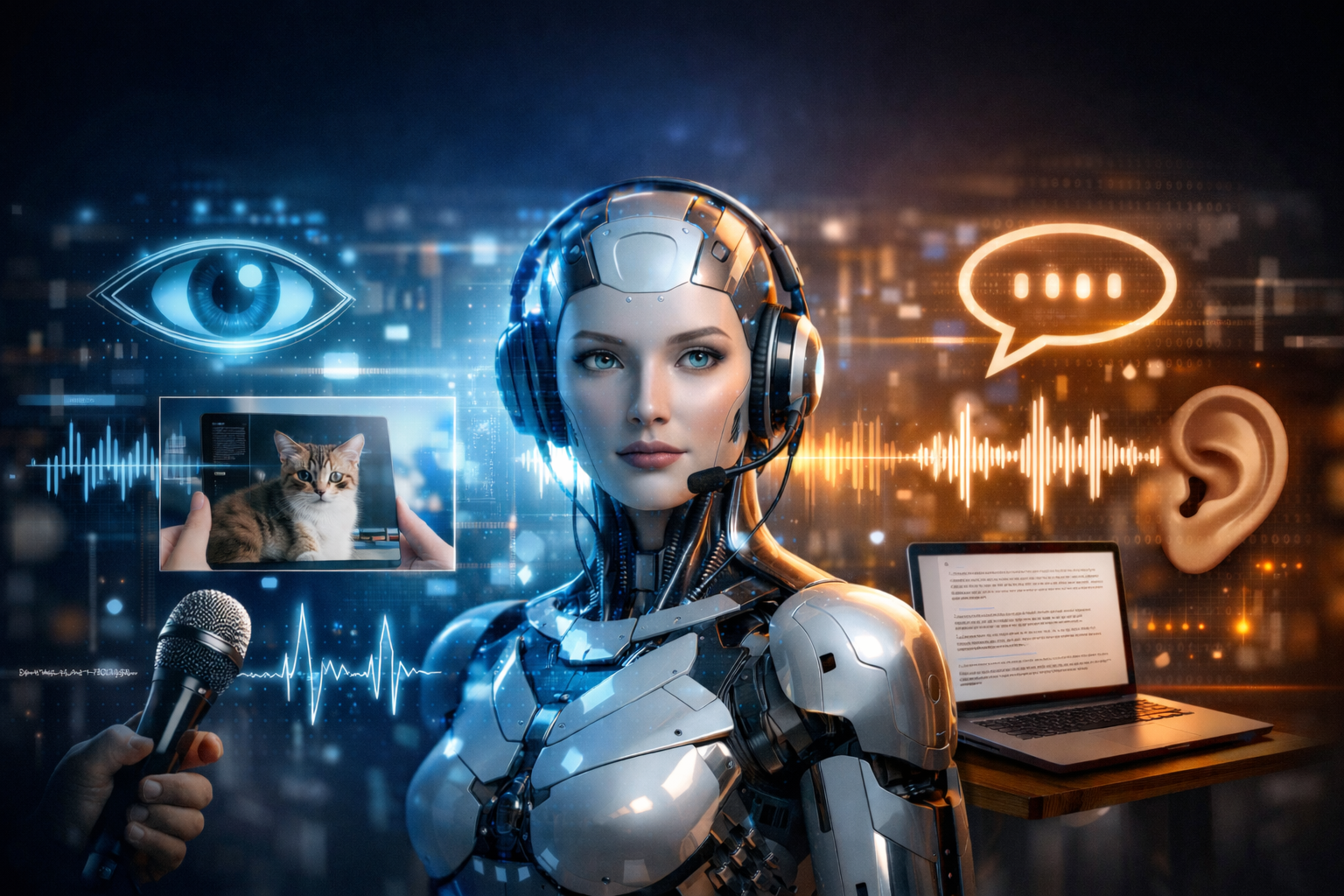
For years, the relationship between humans and AI felt like a long text message thread. You typed something in, it typed something back. No pictures, no sound, no gestures, just words on a screen. It was helpful, but it was also one-dimensional. People do not actually live in a text-only world. We see colors, hear voices, watch videos, and communicate with messy mixes of words and visuals at the same time. That is why the rise of multimodal models feels like such a leap. Suddenly, AI is not just a text generator. It can analyze an image, describe a video, summarize an audio clip, and blend them together in one seamless interaction. Imagine asking it to explain what is happening in a photo of your bike chain, or to turn a meeting recording into a blog post, or to create a video using a script and background music. The AI does not panic. It works across formats, and that shift is why everyone from researchers to high school students is paying attention. Multimodal models make technology feel less like a chatroom and more like a partner who actually shares the senses we use to make sense of the world.
What Does Multimodal Mean Anyway?
Multimodal is a word that sounds fancy, but the idea is straightforward. It means the model can handle more than one mode of input or output. Instead of only dealing with text, it can take in images, audio, video, or combinations of these, and then generate responses in different forms too. Think of it like a student who used to only pass notes in class but now also sketches diagrams, hums tunes, and acts out plays. A simple example is feeding the model a photo of your fridge and asking what you can make for dinner. Instead of only returning a recipe if you typed out the ingredient list, it recognizes the eggs, milk, and leftover broccoli and suggests a frittata. Or imagine recording a guitar riff on your phone, uploading it, and asking the AI to create lyrics and chords that match the feel of what you played. The magic lies not in any single ability but in the way the model switches back and forth between formats as naturally as we do. Humans do not pause to think about which mode they are operating in. We blend senses constantly, and for the first time machines are starting to mimic that flow in ways that feel genuinely useful rather than just technically impressive.
A Story About a Picture Worth a Thousand Prompts
One evening, a student in an art class sits staring at a blank canvas. She knows she wants to create something inspired by the skyline outside her window, but she is stuck and the blankness is starting to feel like a verdict. She snaps a picture of the city at dusk, uploads it to a multimodal AI, and asks for a concept painting idea using the shapes she has captured. The system analyzes the angles of the buildings, notices the gradient of the sunset, and suggests a style that blends cubism with neon palettes. It even generates a sketch to show what the idea might look like in practice. The student does not copy it, but it unlocks her imagination in a way that a text prompt never could have, and by the end of the night she has a half-finished canvas glowing with new energy. A text-only chatbot might have suggested vague themes like urban inspiration or nighttime contrast, but only by seeing the image could the model connect with her creative block and provide something concrete enough to act on. The story shows why multimodal matters. It can meet people where they actually are, not just where their keyboards happen to be.
The Audio Angle
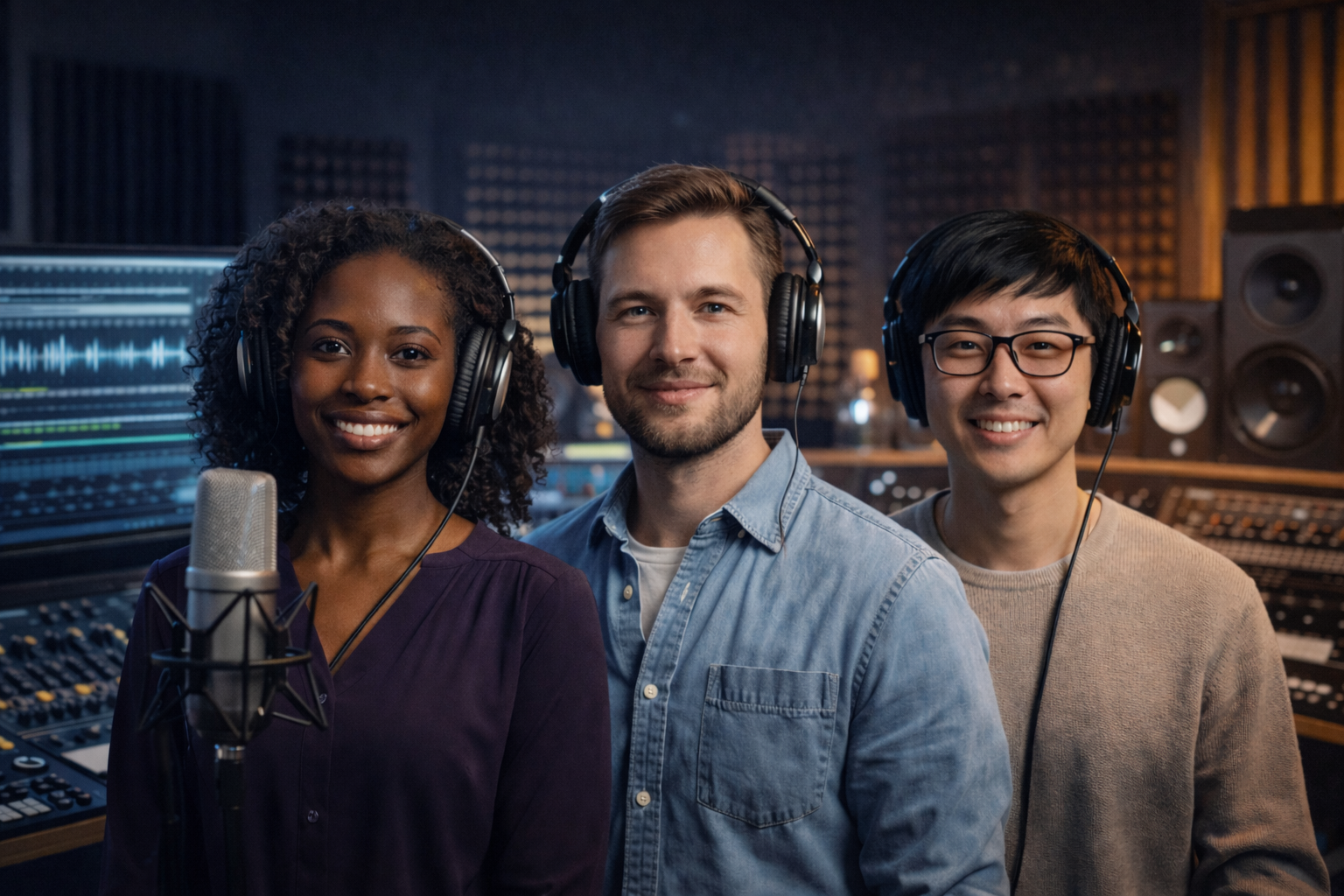
Text and images are impressive, but sound brings its own revolution. Picture a small business owner who records sales calls throughout the week. Normally they would have to listen back to hours of conversations or pay someone to transcribe them, and by the time they finish, the insights have lost their urgency. With a multimodal model, they upload the audio and the system produces not just a transcript but a summary of themes, objections, and opportunities, telling them that most customers asked about delivery times, several raised concerns about warranty details, and two leads seemed ready to buy. Suddenly the mountain of audio becomes a map for action. Accessibility is another powerful use case. A student who is hard of hearing can upload a lecture recording, and the AI not only transcribes it but also highlights key ideas, suggests follow-up readings, and produces flashcards ready for review. That kind of assistance turns raw noise into structured knowledge without requiring the student to depend on someone else doing the work for them. On the output side, audio generation is just as exciting. Imagine humming a tune and asking the model to produce a polished version with instruments. It is like carrying a pocket-sized music studio that listens first and then creates, and for musicians, podcasters, and learners, the audio layer opens up possibilities that text alone never could.
Lights, Camera, AI Action
Video has always been the heavyweight of content. It demands time, energy, and multiple skills to produce, and most people who have something worth saying never get around to saying it on camera because the production barrier is too high. Multimodal models are starting to change that equation in practical ways. A teacher records a science experiment on her phone, vinegar and baking soda erupting in a foamy mess, uploads the clip, and asks the AI to create a student-friendly explanation with captions and a quiz. The result is a packaged mini-lesson ready for her classroom without any editing software or production budget required. A marketing intern films a short walk-through of a store and tells the AI to turn it into a one-minute ad with upbeat background music and subtitles, and within minutes they have a shareable promo without needing a video production team. This ability to digest, interpret, and recreate video is more than convenience. It lowers the barrier to visual storytelling in a world dominated by short-form video platforms where that barrier has historically kept most people on the sidelines. Individuals who never touched editing software can now compete with polished studios, and while the thought of machines churning out videos at scale raises legitimate concerns, it also hints at a more democratized future where anyone can share their story without needing a Hollywood budget to do it.
Why People Actually Care
The hype around multimodal AI is not just about cool demos. It is about alignment with how humans naturally experience the world. People rarely operate in a single channel. A child learns by looking at a picture book, hearing the words read aloud, and then repeating them back. A cook learns a recipe by watching a video, reading instructions, and adjusting based on what they smell coming off the pan. Multimodal systems reflect that blend in a way that text-only tools never could. Consider healthcare, where a doctor uploads an X-ray, asks the model to describe what it sees, and then compares that interpretation with a patient’s chart notes, using both image and text together to arrive at a clearer picture than either would provide alone. Or take journalism, where a reporter records an interview, captures photos on location, and asks the AI to weave both into a cohesive story draft that saves hours of assembly time. People care about multimodal AI because it feels closer to how they already think and work. It is not about replacing one skill with a machine. It is about weaving senses into a more natural partnership that makes the technology feel less like a gimmick and more like something that actually understands how human communication works.

The Double-Edged Sword of Realism
There is a flipside to every breakthrough, and with multimodal models it is realism. The ability to generate convincing images, videos, and audio raises thorny questions that are not easy to dismiss. Imagine a fake video of a politician saying something inflammatory, created in minutes by combining a voice sample and stock footage, or a fabricated photo of a celebrity in a compromising setting that spreads across social media before anyone can verify it. Multimodal models make it easier to create content that looks authentic even when it is not, and that power unsettles people because it blurs the line between evidence and invention in ways that feel genuinely dangerous. Already, schools and newsrooms are debating how to verify what they see, and that debate is only going to intensify. The same tools that create deepfakes can also be used to detect them, though, and some labs are building watermarking systems and forensic checks that tag generated content at the source. Others are focusing on teaching users to question sources more critically rather than simply trusting what arrives in front of them. Like any tool, the problem is not the existence of power but how it is applied. Fire can cook dinner or burn down a village. Multimodal AI can amplify creativity or magnify misinformation, and the responsibility for deciding which direction wins out will rest on both developers and the rest of us.
Everyday Life, Upgraded
The practical uses of multimodal models stretch into everyday life in ways people might not notice at first because the technology is designed to disappear into the background. Imagine a tourist lost in a foreign city who, instead of fumbling with a dictionary app, points their phone at a street sign and asks what it means. The AI translates instantly, pronounces the words, and suggests the nearest metro station without requiring the tourist to know what language they are dealing with. Or picture a parent helping a child with homework, where the kid points to a confusing math problem in a textbook and the AI not only explains the problem step by step but also highlights similar examples from the chapter and suggests a short video tutorial that matches the way the concept was introduced in class. These are not futuristic fantasies. They are small, daily improvements already seeping into apps that people use without thinking about the technology underneath. The charm lies in how invisible the shift feels. People do not sit around saying they are now using multimodal AI. They just experience smoother moments where friction disappears, and that quiet integration may end up being the most powerful change of all because it turns AI from a flashy showcase into a reliable background companion that earns trust by staying out of the way.
The Business Case
Companies are eager to capitalize, and the use cases are compelling enough that most industries are at least running pilots. An online retailer imagines shoppers uploading a photo of shoes they like and asking the AI to find similar products in the catalog without requiring the shopper to know the right search terms. A real estate firm wants to convert walk-through videos into searchable data so buyers can ask for listings with specific features rather than scrolling through photos. In customer support, a frustrated user uploads a screenshot of an error message, and the AI not only identifies the problem but walks them through fixing it with annotated images that match what the user is actually seeing on their screen. Each of these examples saves time and boosts engagement in ways that directly affect the bottom line. At the same time, companies know there is risk involved. Misinterpreting a photo could lead to wrong advice. Mishandling sensitive audio could violate privacy laws or damage trust in ways that take years to repair. The business case is strong, but so is the demand for safeguards. Leaders are learning that adopting multimodal AI is not about deploying it everywhere at once. It is about choosing the moments where the blend of inputs actually solves a problem better than text alone, because done well it feels like magic, and done poorly it feels like chaos.
The Road Ahead
The research community is pushing hard toward models that can juggle multiple modes more fluidly than current systems allow. Today, many systems handle text and images reasonably well but stumble when asked to combine video, sound, and contextual reasoning in a single chain of thought. The dream is a model that can watch a movie scene, analyze the dialogue, describe the visual symbolism, and suggest how the soundtrack shapes the emotional tone of the moment, all in one coherent response. It sounds ambitious, but progress has been faster than most people expected even two years ago. The other frontier is personalization. Imagine an AI that learns your communication style, your hobbies, your accent, and adapts its multimodal responses accordingly, so that showing it a photo of your messy garage produces not just a generic organization plan but one tailored to your budget, your aesthetic, and the way you have described your life in past conversations. That level of tailoring turns a generic tool into something that feels almost like a companion, and whether that excites or unnerves you depends largely on how much intimacy you are comfortable inviting into your relationship with technology. Either way, the direction is clear. Multimodal models are not a passing trend. They are a new foundation for how humans and machines interact, and the ground is still being laid.

Conclusion: Seeing, Hearing, and Understanding
The move from text-only AI to multimodal models is like stepping out of a silent black-and-white film into full-color surround sound. Suddenly, the technology does not just respond to typed commands. It looks at what we see, listens to what we hear, and creates in formats that feel alive rather than mechanical. The stories worth remembering from this shift are not the technical ones. They are the art student who found her direction, the teacher who packaged a lesson in minutes, and the tourist who stopped feeling lost. Those are early hints of what is possible when machines learn to meet people where they actually are. The heart of the shift is not novelty. It is alignment. For the first time, machines are learning to communicate in the messy, mixed ways that humans always have, and that is why people lean in with curiosity and a little apprehension at the same time. There is joy in the creativity, efficiency in the practicality, and genuine unease in the realism. Multimodal AI reflects both the best and the most unsettling parts of where this technology is heading, and the story is not finished. We are leaving the text-only era behind, and the next conversation we have with machines will be words, pictures, sounds, and stories woven together.
The move from text-only AI to systems that can see, hear, and respond across formats is less about the technology becoming smarter and more about it becoming more human in the ways that actually matter for everyday use. That shift will keep accelerating, and the experiences it makes possible will keep getting harder to distinguish from natural interaction. The question worth holding onto is not what multimodal AI can do, but what you want to do with it, and whether the way you use it reflects something intentional or just something convenient.
Ronnie Canty | Canty’s Consulting & Instructional Delivery