
Why “No Response” Is Now a Full-Blown Conversation
Silence in a digital world now feels like a full conversation because technology turns every pause into something you can see, replay, and analyze. This expanded version adds stories, examples, and extra context to deepen each idea from your original post.
Introduction: When Nothing Says Everything
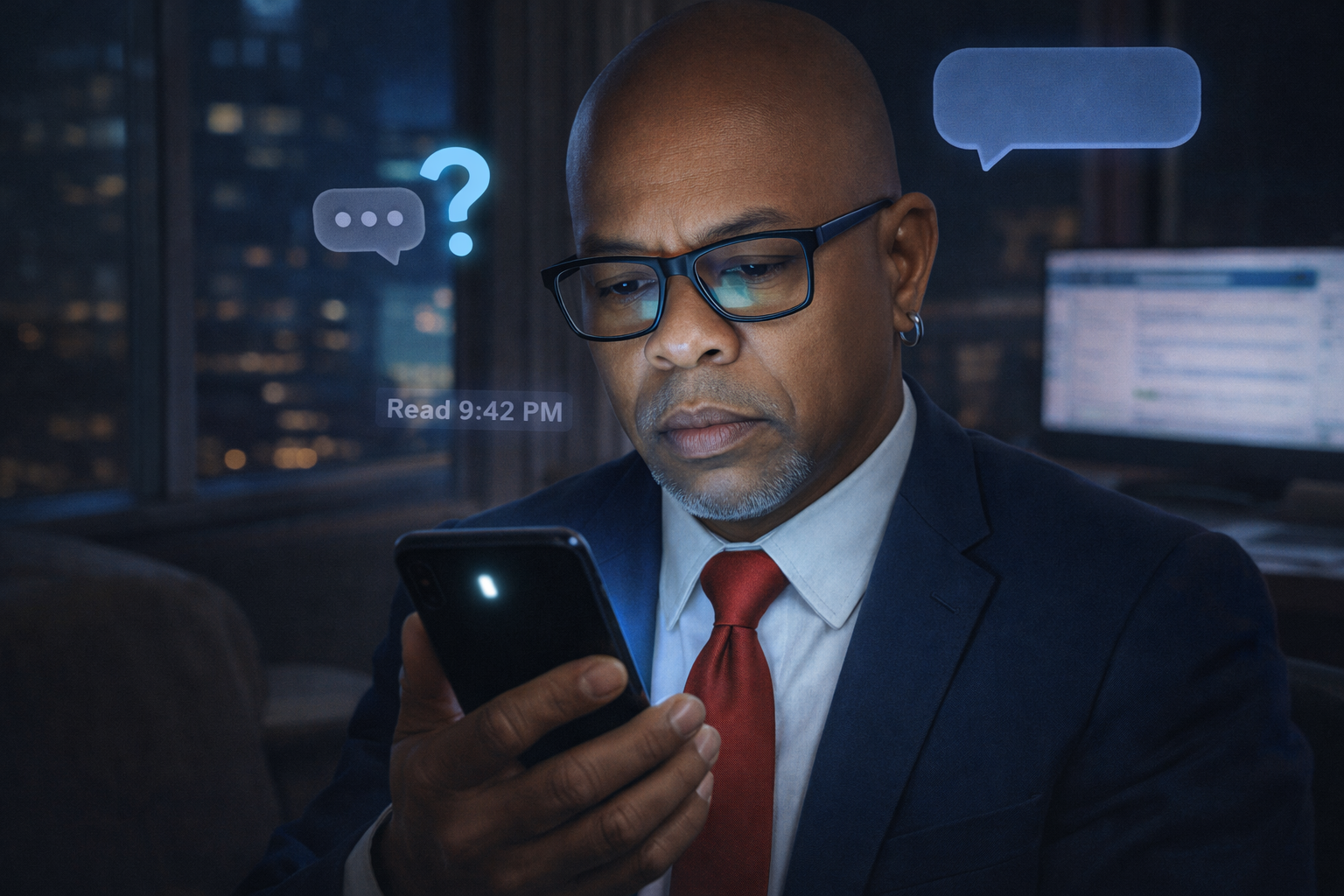
Once upon a time, if someone did not call you back, you shrugged and assumed they were busy, driving, or had simply forgotten where they put your number. Now you can see that they liked three memes, watched your story, and were “active 12 minutes ago” while your message still sits on “Read.”
Think about the last time you saw those tiny words: “Seen 10:03 PM.” You probably did not just note the time and move on. You replayed what you said, checked your tone, maybe even scrolled up to reread the entire thread, looking for the exact sentence where you “must have ruined it.”
Technology did not invent silence; it just wrapped it in timestamps, badges, and notifications, then handed you a front-row seat to every pause in real time. Every delay becomes a potential rejection, every gap a puzzle your brain rushes to solve, often without any actual data. That quiet gap is where your mind starts building emotional documentaries with you as the main character and zero fact-checking.
Silence Is No Longer Neutral
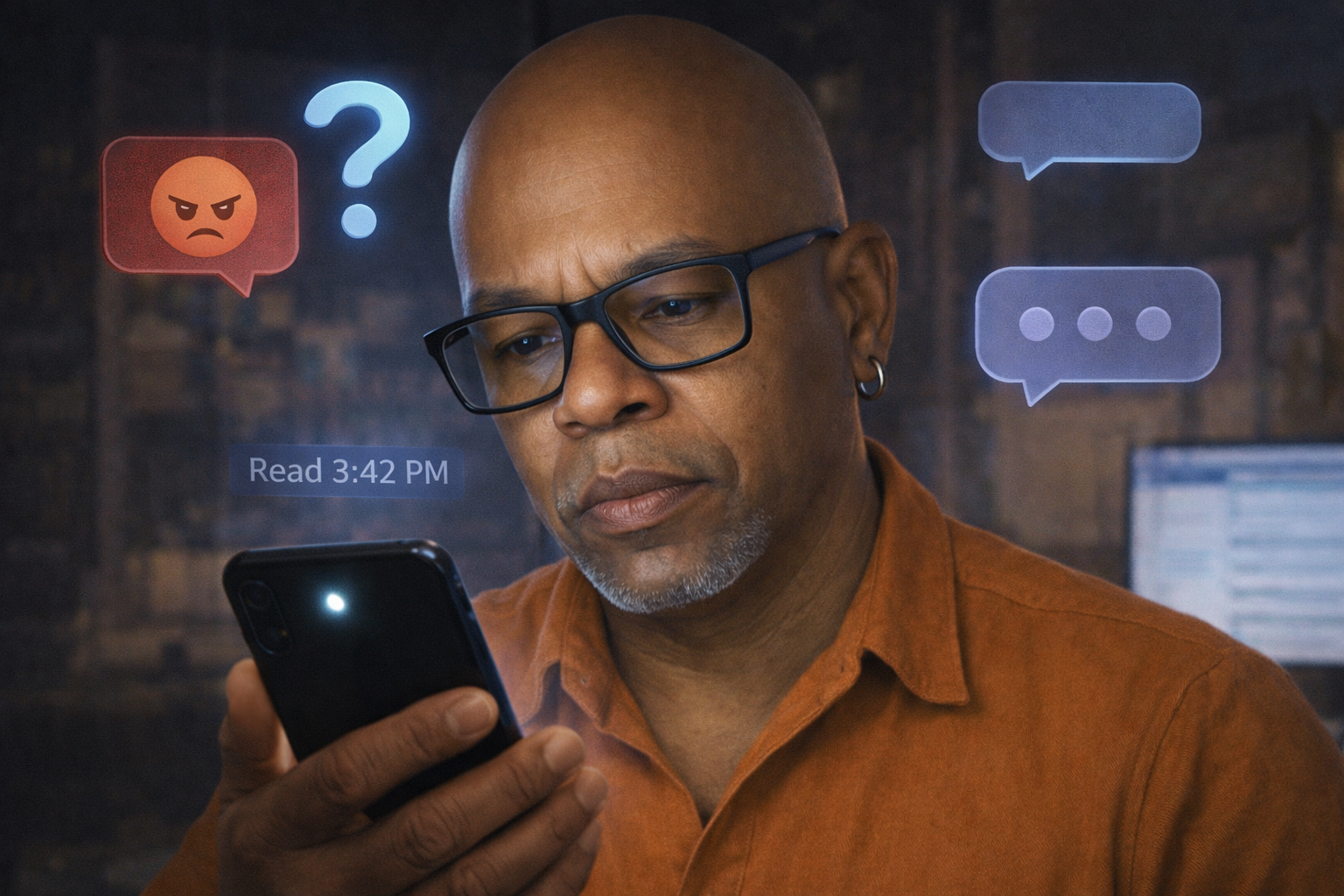
In the offline world, if a letter did not arrive or a call never came, you might assume the post was slow or the person forgot, and then life pulled your attention elsewhere. In the digital world, you see “Read 3:42 PM,” and by 3:47 PM your mind is already negotiating with reality: “Maybe they are driving… or annoyed… or done with me… or secretly furious.”
Picture this: you send a vulnerable text—“Hey, did I do something that upset you?”—and you watch it flip from “Delivered” to “Read.” You wait. Five minutes. Ten. An hour. You keep opening the chat like something new might appear if you look at it hard enough. Nothing changes on the screen, but everything changes in your body: your chest tightens, your stomach drops, your thoughts spiral. The silence feels louder than any argument.
Read receipts and status indicators turn waiting into a kind of psychological endurance sport. The dots appear, disappear, reappear—hope rises and crashes in seconds. Maybe they started typing and got a phone call. Maybe they changed their mind mid-sentence. Maybe their battery died. Your brain does not care about the most boring explanation; it goes straight to the most dramatic one because that is what uncertainty does. Silence used to be an absence. Now it looks like a decision, even when it is not.
Read Receipts Changed the Game
Read receipts create the illusion of certainty—you know the message has been seen—but give you zero clarity about what it meant to the other person. It feels like someone making intense eye contact and then walking away without a word. You are left holding your own assumptions, mistaking them for evidence.
Imagine a group chat where you drop a thoughtful voice note or an idea for a meetup. One by one, you see the little circles slide down to show everyone has “Seen” it. Then the chat goes quiet. Later, someone sends a random meme, and the conversation picks up as if your message never existed. You do not just feel ignored; you feel erased. In reality, people might have listened while juggling kids, deadlines, or pure exhaustion. But thanks to read receipts, the silence after your message is framed as an intentional response.
The uncomfortable truth is that most digital silence is not about you. People get distracted mid-reply, draft something and forget to hit send, or decide to respond when they “have more time” and then never do. Platforms show just enough to trigger interpretation—“Read,” “Active now,” “Typing…”—but not enough to provide context. That gap between what the system shows and what is actually happening is where insecurity thrives. Silence is no longer neutral; it is a screen you project your fears onto.
Algorithms Add Meaning You Never Agreed To
When you send a message on social media, you imagine it traveling in a straight line: from your phone to theirs. In reality, it travels through a maze of filters, ranking systems, and notification settings. Your DM might land in a “Requests” folder, your comment might get buried under hundreds of others, or your notification might arrive hours late. To you, the silence feels personal. To the system, it is just sorting and prioritizing.
Think about messaging someone with a large following. You pour your heart into a vulnerable note, hit send, and wait days with no reply. It feels like proof you do not matter. But their inbox might be flooded, your message pushed down by new ones, or auto-filtered by spam controls. Or consider emails that slip into “Promotions” or “Spam” while you refresh your inbox wondering why they never answered your application or proposal. The algorithm is silently rewriting your expectations of other people without your consent.
Automation complicates things further. You get an instant “Thanks for reaching out!” auto-reply, followed by days of nothing. Or you talk to a chatbot that resolves your question technically, but leaves you emotionally unsatisfied. The conversation looks complete, yet feels unfinished because no human actually held your concern. This creates a strange imbalance: you bring human meaning to machine-shaped spaces and then feel hurt when they do not behave like humans. The real danger is not the technology itself, but the assumption that every silence online carries intent. That assumption turns digital waiting into worry, and simple misfires into stories of rejection.
When “No Response” Gets Amplified
The thing about phones is that they turn one unanswered message into a day-long companion. It sits in your pocket as a tiny, persistent reminder: “Still no answer.” Every time you unlock your screen, you see the same frozen moment—your last line, their last response, the empty space where a reply could be.
Imagine someone does not respond to your text about hanging out this weekend. Meanwhile, you keep seeing them post on their story—brunch, gym, game night. You are not just dealing with silence; you are watching them be visibly active everywhere but in your conversation. The absence of a reply gets louder with every new post. Algorithms amplify “no response” by making activity visible while withholding the context behind the silence. Maybe they are stressed, sick, or socially overwhelmed. Maybe your message slipped below a flood of notifications. All you see is: they are online, but not with you.
Systems scale uncertainty. In the past, you might wonder about one late letter or missed call. Now you can track dozens of micro-silences across apps: unopened snaps, ignored tags, unliked posts, unanswered DMs. Each one is tiny on its own, but together they can feel like a verdict on your social worth. The more you see, the more your brain tries to connect the dots—and the more likely it is to draw the wrong picture.
How to Stop Letting Digital Silence Run Your Life
The goal is not to pretend silence does not sting. It is to stop treating every gap as a verdict on your value. Silence is information, but it is incomplete information—like a blurry photo where you can see shapes but not details. Acting as if that blur is a high-definition truth is where the pain multiplies.
A few grounded moves help you reclaim your sanity:
- Name the gap.
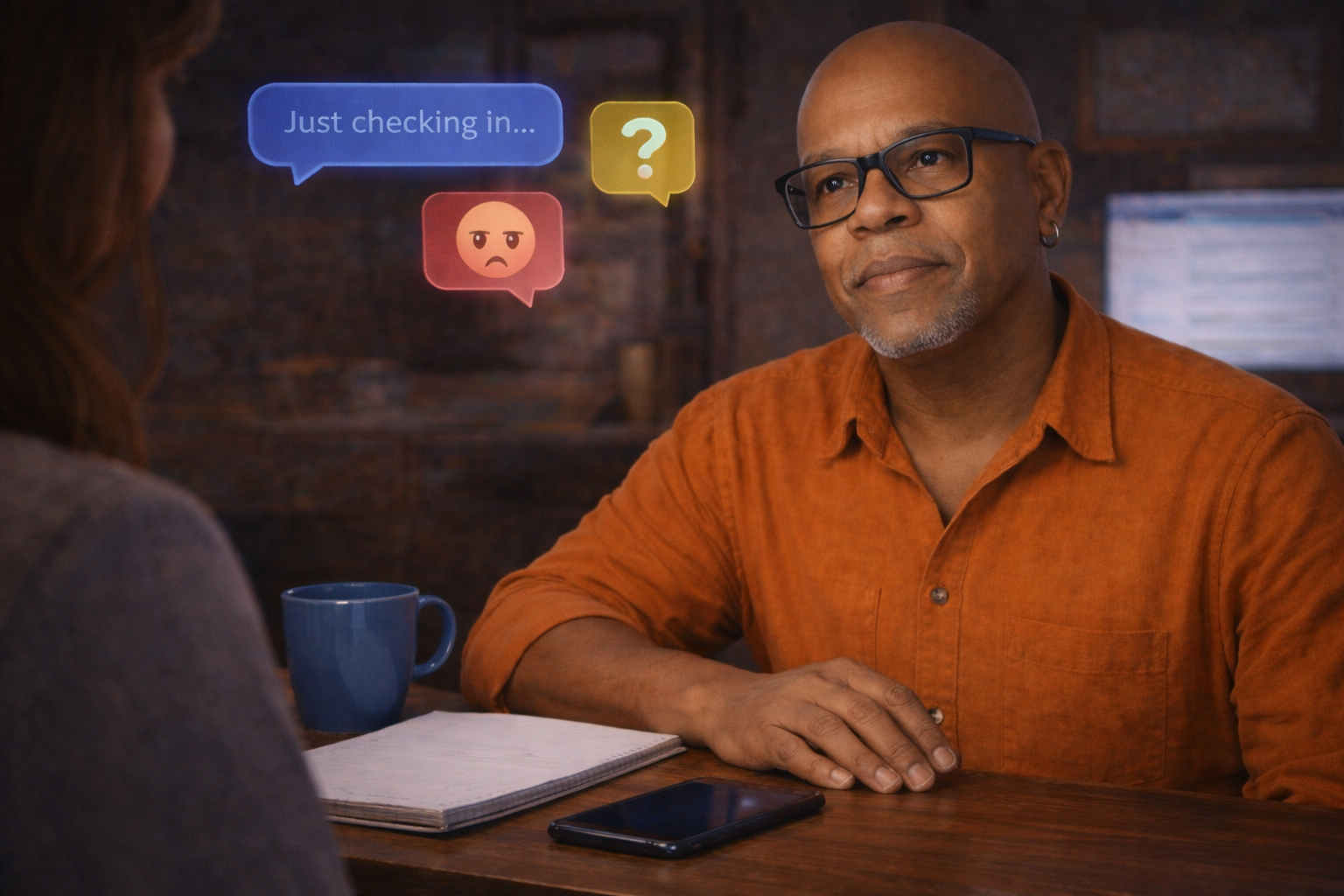
Instead of waiting in quiet resentment, send a calm “Hey, just following up on this” or “Wanted to check if you saw my message.” That is not desperation; it is clarity. It shifts you out of guessing mode and gives the other person a clear chance to respond. Many people are relieved when you spell things out instead of silently keeping score.
- Separate delay from rejection.
Time is not intent. Someone who replies in two minutes is not automatically more caring than someone who replies in two days. Think of times you have cared deeply yet still replied late because you were overwhelmed, depressed, burned out, or simply out of mental bandwidth. Extending that possibility to others does not excuse true neglect, but it keeps you from turning every delay into proof that you do not matter.
- Notice your story.
When silence hits, your inner narrator might go straight to “They are mad,” “They are done with me,” or “I said something stupid.” Before you accept that as truth, pause and label it: “I am telling myself the story that…” This tiny move creates distance between you and the narrative. You can then ask, “What are three other explanations that are less dramatic but at least as possible?” Often, they are boring—and much more accurate.
- Build norms on purpose.
In close relationships and at work, talk openly about response expectations instead of guessing. For example: “I do not need instant replies, but if something is urgent, I will call,” or “If I do not respond right away, it is probably because I am in focus mode, not upset.” Clear norms turn silence from a mystery into something predictable.
Technology rewards speed; emotional health rewards reflection. The platforms push you to stay in constant reaction mode, but you can choose to slow your interpretations down. Digital silence will always invite projection. You do not have to accept every invitation.
Say What Silence Makes You Feel
The most powerful move is not decoding silence—it is naming its impact. Instead of assuming, “They are ignoring me,” you can say, “When I do not hear back, I feel anxious and start worrying I upset you.” That turns unspoken tension into an actual conversation point.
Imagine telling a friend, “Hey, when my messages sit on read for days, I start to feel insecure. I know you are busy, but can we figure out a rhythm that works for both of us?” Suddenly, you are not attacking their character; you are sharing your experience. They might say, “I genuinely forget to reply, but I care. Let me mute some group chats so I am less overwhelmed,” or “I am not a fast texter, but it is not about you.” You get real data instead of silent guessing.
Silence only controls you when it stays unnamed. Once you turn it into words—about your feelings, your needs, your boundaries—you turn mystery into something actionable. You may not always like the answer you get, but even a hard truth is easier to live with than an ever-expanding story your brain writes alone.

Conclusion: Silence Is Data, Not Destiny
Silence hits different now because platforms frame it as meaningful by design—read receipts, active status, and algorithms all whisper, “This means something about you.” Sometimes they are right: some silences do reveal priorities, mismatched effort, or changing relationships. Often, though, the systems simply magnify ordinary chaos, distraction, and overload.
The real skill in a digital world is learning when to pause, when to clarify, and when to let an empty space stay empty instead of filling it with self-blame. Communication has not necessarily gotten worse; it has gotten louder, faster, and more exposed. Silence is still silence. The difference is how aggressively we now notice it—and how quickly we let that noticing turn into meaning. Noticing is not the same as understanding, and you are allowed to wait for more evidence before deciding what a pause really says about you.
If this made you pause, that pause matters.
Communication doesn’t improve by accident. It improves when you notice what’s happening, question your assumptions, and stay curious a little longer than usual. Take what stood out, sit with it, and see how it shows up in your next conversation. That’s where the real work begins.
Canty